The Doodad Economy: Why your analog games are starting to feel digital (and also why that's false)

In light of a recent story about Wizards of the Coast openly boasting that Dungeons & Dragons is better viewed as a live service, I'm sharing the text of my presentation at the 2026 UNC-Greensboro Game Studies Conference. It's partly about this, even if it's not specifically about it.
I want to start by thanking all of you for being here. I'm Dr. Ian Williams, adjunct instructor at the UNC-Chapel Hill Department of Communication. I study craft via and in games. Very generally I’m interested in how things are made. When it comes to games, I want us to treat game companies the same as we do any other, and to analyze how business logics inform design decisions.
Today I’m going to talk about what I call the doodad economy. The doodad economy consists of a plethora of third party manufacturers making play aids for analog games, primarily miniatures wargames and boardgames. I want to make a distinction between the doodad manufacturers and makers of digital apps for analog games. My interest here is in the specific analog play aids market, the design considerations which give rise to doodads’ necessity, and the ways that assumptions about digital games make their way into analog games via this marketplace.
I want to start with a brief overview of an essay by design scholar Sebastian Deterding titled Living Room Wars: Remediation, Boardgames, and the Early History of Video Wargaming. It does a great job of discussion remediation of the wargame form within digital games and charts a history which reads as follows: there were really complicated wargames, which became commercial wargames, which had various off-shoots like tabletop roleplaying games, and eventually we arrive at video games. The ultimate remediation, according to Deterding, are the ludic preferences of the grognards, those old, dorky wargamers whose early move from analog wargames into video games established the game design practices we’re all still stuck with. The grognard is a figure of both fascination and revulsion for Deterding, both the wise forerunner of a mediatic form which changed the world and the impossibly backward, reactionary figure which keeps holding it back.
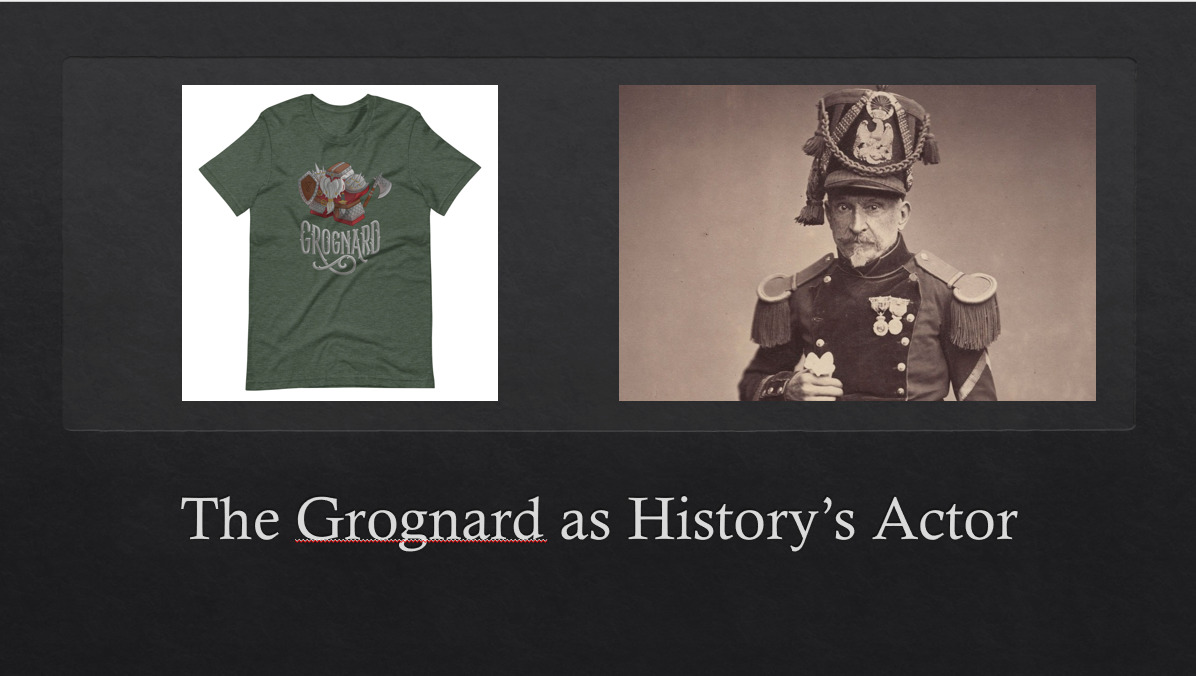
One of Deterding’s arguments for this teleological view of gaming history is that, as the grognards iterated upon design and craved ever more complex mechanics, the math in wargames of the Avalon Hill variety bogged down play so much that a computer was needed to facilitate play. The disappearance of obvious calculations, the physical movement of playing pieces, and often the disappearance of other players entirely behind computers allowed the grognards to inhabit a new role: that of gamer. The history and the argument is compelling. It’s also, despite its many merits, incomplete.
What Deterding neglects to examine as closely as I would like is the simple fact that not everyone moves with the digital grognard into the world of digital games. Quite a few stayed within the realm of the analog. Even worse for Deterding’s overly teleological analysis, it turns out that, after several reckonings, women, people of color, queer people, and a global population of gamers prefer the analog to the digital. The proof is quite simple: go down Spring Garden Street to Lost Ark or across town to Dragon’s Hoard and see the wealth of analog games and the diversity of the clientele. If the end of history were digital games, we could tell. Those stores would be empty.
Another issue with Deterding’s analysis is, of course, that the digital and analog aren’t a binary. Rather, they’re relational. As media theorist Jonathan Sterne notes, the appeal of the analog is that it’s imagined as more honest and authentic, with a host of political assumptions deriving from that imagination. To the extent that the distinction is meaningful at all, and I do yield here that I am working within that distinction for the purposes of legibility and argument, there was nothing which fated the march to the digital, because the digital isn’t precisely digital any more than the analog is analog. Certainly, the “pure” digital was used in production of analog games by the 1980s, not to mention that the simple act of having an analog game shipped to you or buying it at a store already complicated the supposedly more straightforward analog nature of the games.
Still, we have to grant, and here I go arguing from the standpoint of the binary, that even with this relational nature of analog and digital in mind the problem of math and game complexity in analog games proceeded unhindered. It’s well beyond the scope of this presentation to provide a minute accounting of relative complexity in analog games from 1920 to 2026. I’m content to leave it at there are varying levels of complexity and some games have become demonstrably more complicated over editions, examples of which I’ll give shortly.
For now, let me present the following conundrum. You play analog games for your own reasons but those reasons are attached in some way to their status as non-digital. You like complex and/or math heavy games, and your preferred analog games are perhaps or even likely getting more complex. Because you want your games to be non-digital, you want an equally non-digital solution to the problem of complexity. What’s a gamer to do?
Enter the doodad. About ten years ago, more or less coterminous with the rise of cheap home 3D printing, I noticed a proliferation of websites selling analog play aids. There were markers, trackers, dials, widgets, sticks, organizers, and three-dimensional terrain for two-dimensional board games. There were stands for pieces and abacuses. On and on it went, an overwhelming number of aids which were similar enough to fall into a broad category of “analog stuff you need to smooth your play experience so as to let you perform the role of gamer” but distinct enough to not be any one thing. I called them doodads, and please don’t take this as a neologic pronouncement from an academic perch.
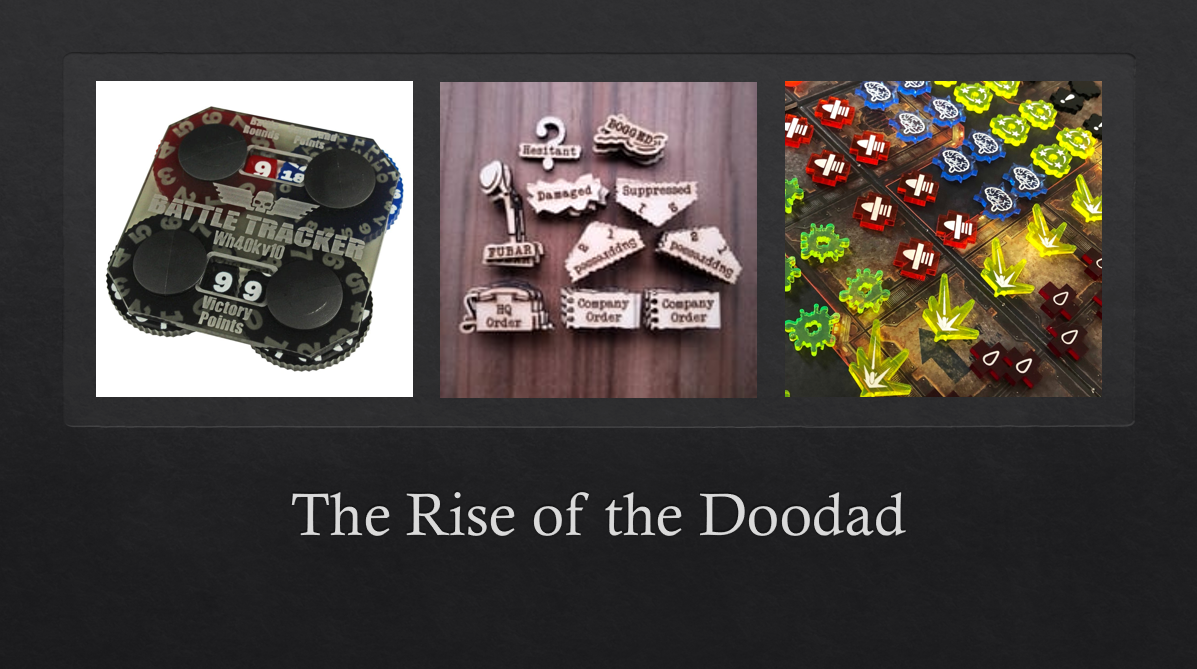
The number of doodads out on the market only grew from there. First, Dungeons and Dragons became cool. So did Warhammer. Board game cafes became a thing. Then COVID happened and people were stuck inside. When I was working on my dissertation, which studies the miniatures wargames industry as a craft sector, I started bookmarking websites. The doodads folder has 73 individual websites bookmarked. I stopped after that since I reached diminishing returns.
What doodads do is maintain the allure of the analog while helping players deal with modern games’ complexity. You can set up your doodads in a customized fashion, look at the table or board, and think yes, this is an analog game. It’s all analog. That’s an enticing thing.
Importantly, these analog solutions are only possible via the advent of digital marketplaces, a fact which further muddies the analog-digital distinction. Cultural theorist Susan Luckman and sociologist Alessandro Gandini have written at length about the ways that craft now necessarily relies on digital platforms for its realization. The most direct example of this, and it’s one Luckman uses at length, is Etsy, where many doodad sellers ply their wares. There’s no local craft market you can walk to every weekend to sell 3D printed doodads, and there’s no artisanal eBay to sell them on.
So if these things aren’t really analog and analog isn’t really a thing, why the doodads? I want to stress again that the political imaginary attached to what we know colloquially as the analog is powerful. This takes the form of common origin stories in game design, with stories and interviews about half-remembered adolescent games of D&D as a pivotal moment. It takes the form of craft’s imagined opposition to and decoupling from the depredations of capitalism or the hoped for liberatory potential of craftivism. It takes the form of the buzz of a console controller offering the supposedly real analog approximation of a bullet or a fall as it lightly vibrates in your hand. For a lot of players, and certainly it’s enough of them to keep dozens of doodad makers in business, games that are analog should stay analog for reasons of authenticity.
Doodads attempt to solve the problem of complexity while keeping things analog. A question arises, then: if analog players want analog play aids, why do more games not come with them? And, a related question, why is a company like Fantasy Flight an object of fun on the basis that its games come with TOO MANY analog play aids? Lastly, why don’t analog game companies just make less complex games?
I’ll address these briefly in reverse order. On the matter of complexity, Deterding is correct: we like our complex games. Maybe not all the time, maybe not in every game, but players do tend to demand games with lots of moving parts and novel game mechanics. Novelty is in short supply, things have been done, which is why I’m certain that any of you play analog games can recall times when you’re on your third game of the night for your weekly game night, that makes 12 games a month, and you encounter some new, clever mechanic and you have that punctum of oh, that’s really cool. Complexity can and often does stand in for novelty.
On the matter of official play aids and games which come with too many, don’t underrate the power of control. We like to feel in control of things at the table. Finding third party doodads is fun. There’s a distinction to being the sort of analog gamer who comes to the table with a doodad nobody’s ever seen before. It serves as a subcultural language of prestige, allows the player to inhabit the role of gamer, and, in some cases, allows for meaningful advantage. Fantasy Flight cramming its boxes with chits and tokens addresses the problem of complexity in the wrong ways.
Lastly, on the matter of why so many games come without play aids: because companies know someone else will make them. This is why the doodad economy started as a trickle and became a flood. It’s the sort of thing I can’t prove without qualitative research, but I’m experienced enough to recognize a trap that arises from this and which ties ever increasing complexity to the relative cheapness of doodad manufacture. Namely, if one doesn’t have to address complexity by designing simpler games because someone else is handling play aids, there’s no incentive to EVER address complexity. In fact, the opposite happens: you design ever more complex games with the expectation that it’s up to players and doodad makers to figure it out.
I want to provide two examples of this tendency to put cognitive load management onto players rather than designing to decrease it. The first is Warhammer, whatever flavor you might be familiar with. Games Workshop has two design directives for its main branch games dating back to its founding. The first is that the only dice used in the game are standard d6s. That this is a design rule in this instance is stated publicly: Rick Priestley, original co-designer of Warhammer and Warhammer 40k, insisted upon d6 supremacy since he figured most people have them lying around, while other polyhedral dice aren’t common.
The second design pillar is more a matter of observation than official decree. Warhammer operates on an IGOUGO system. That is, I move all my troops, I shoot with all my troops, I charge with all my troops, etc. and then you do that. Then we switch back. While they’ve never addressed why they design this way publicly, my strong suspicion is that it’s for the same sort of reason as the d6 fixation. IGOUGO is legible to new players who might be coming from Monopoly. Do your stuff, I do mine, back and forth.
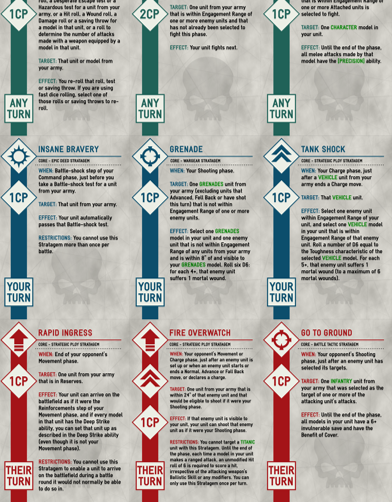
As games became larger with more miniatures, because Games Workshop is in the business of selling miniatures over all other considerations, they ran into a problem: people sat around doing a lot of nothing during their opponents’ turns. One of the solutions Games Workshop eventually enacted in Warhammer 40k is the stratagem system. Keeping it brief, you get a currency each turn which you can use to interrupt your opponent’s turn in brief fashion, boost your troops, or do other special stuff. It’s a design for a social problem: keep people from being bored, which me being me, I just figure you could talk to your opponent, but I’m weird like that. In practice, strategems quickly got out of hand. In the 9th edition of the game, there were dozens of strategems which most players couldn’t keep up with. Many of these were buffs or debuffs, meaning that you needed to keep track of which units were affected on a rolling basis. So you needed tokens, except Games Workshop doesn’t make official tokens. And the mission objectives shifted each turn, which became another thing to track. On and on, until a relatively slim and simple set of base rules, which even rise to the level of elegant in places, became in practice something difficult to play without the doodad economy to wrangle it.
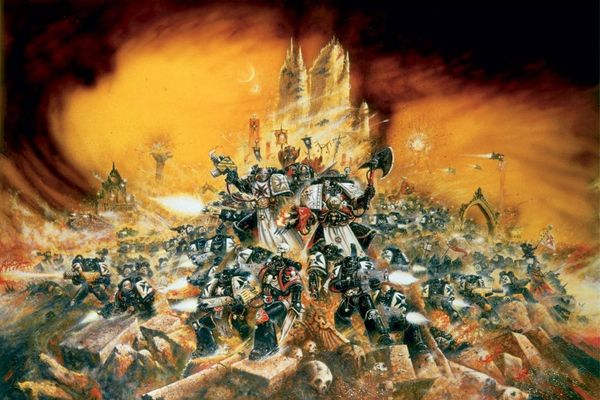
The photo here is a snapshot of the current 10th edition’s stratagems. These are the ones any faction can use. Each faction has around 6 more they need to remember at any one time. Then you ideally need to remember the other factions’ stratagems if you want to play competitively at a high level. Then various battlefield scenarios add more. And this is in the 10th edition, which has FEWER stratagems than the aforementioned 9th edition.
My second example is Gloomhaven. (ed note: there were audible groans when I said the word "Gloomhaven" and that was quite funny)
Gloomhaven is a dungeon crawler board game in which you undertake various quests with an ever changing party whose members are unlocked at various waypoints. It became famous on its release for the sheer size of the box and its cost. The thing is massive and, frankly, overwhelming. The core gameplay expectation is that the players will be ruthlessly efficient in clearing dungeons. Each dungeon has a timer keyed to how many cards the players have to use their abilities and move. You must play cards, which are then discarded and recycled. Even one wrong move or poorly chosen attack creates a cascade of eventual failure which the average player isn’t even aware is coming.
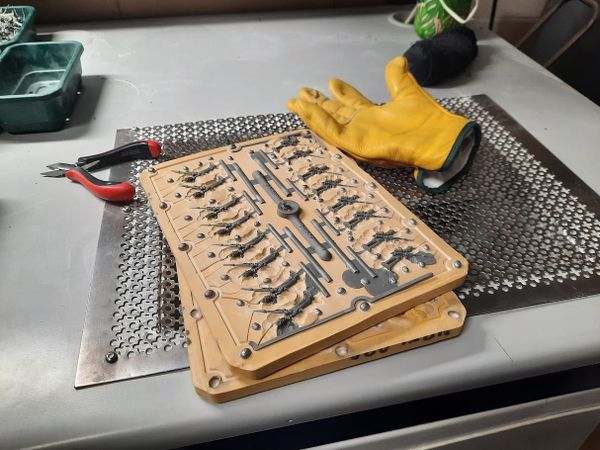
In addition to the stress, and let me assure you that, at least for my regular group, Gloomhaven was 6 months of misery and anxiety, players have to track the health and actions of each monster on the board, with more monsters added to the board each time they enter a new room. There are dozens of monsters, 28 player character classes, and variable difficulty levels which adjust all the statistics in question. Here, again, we find doodads as the solution. The most obvious are MDF board organizers which slot into your box to help corral the accoutrements of the game. Other doodads, like the monster stand in the top photo, help alleviate the problem of calculation in appropriately analog fashion.
A funny anecdote about Gloomhaven. I used to work in games and sports media before entering academia and I had a robust Twitter following because of it. Because part of my job was to be present on social media, I tweeted that I’d bought Gloomhaven and was excited to play. Within an hour I got a DM from someone I only sort of knew in an online sense. The DM said, and I’m paraphrasing because I deleted my account, “you can’t play this game out of the box, I promise, let me send you some play aids”. There was some back and forth between us and, once I decided they weren’t going to show up at my door with a gun, I gave my address. Five days later a box filled with doodads arrived. Stands and organizers, mostly. And this person was correct: I can’t imagine what a pain it would’ve been to play raw Gloomhaven.
What I find interesting about the Gloomhaven example is that Warhammer iterated itself into a place where doodads are required over a period of nearly 40 years. Gloomhaven came roaring out of the gates with all cognitive load guns blazing. I’d like to offer that this is an indication of designer assumptions about what players will definitely do to manage cognitive load, which is to turn to doodads. And, not for nothing, the digital version of Gloomhaven is a delight to play.
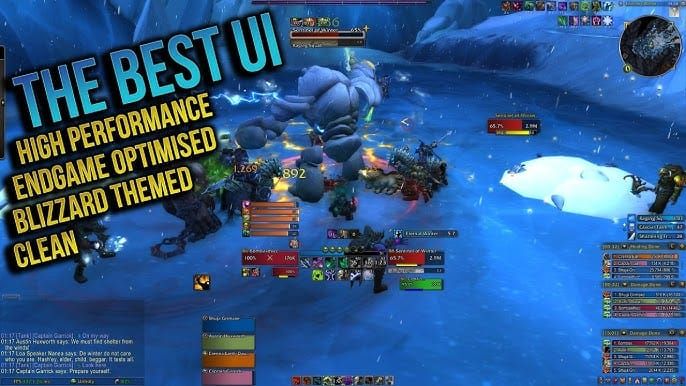
A strange thing happens when you stare at doodads more than you should. They start to look like the custom UIs in digital games like World of Warcraft. It’s hard to recall 20+ years after its release, but a tremendous part of WoW’s initial appeal was the fact that you could design and distribute addons for the game, allowing for a fully customizable experience. And, in those early days, WoW’s functionality was almost completely unlocked. You could automate actions, track nearly any metric, and have the game yell at you if you stood in fire. An entire cottage industry of coders and designers who only made WoW addons arose, and it looked and still looks an awful lot like the doodad economy.
WoW was hands off about this for years, right up until the newest expansion, Midnight, which released just a few weeks ago. Blizzard drastically curtailed UI customization because they found themselves designing around addons and they worried that mastery of WoW was contingent on mastery of UI customization. As WoW director Ion Hazzikostas put it, “players often will be told to download specific addons to improve their class performance, or to defeat a specific encounter. Guilds—or even pickup groups—commonly require the use of specific addons for mid-combat coordination. While we have never designed FOR addons, in the sense of making a specific encounter or class mechanic with the intent that players would write addons to solve a given puzzle, we have inevitably had to design AROUND them for the past several expansions.”
I want to argue that designing for and designing around is a distinction without much difference. That these were ultimately social conventions around pressures to perform is not, as Hazzikostas has it, something they designed AROUND. Despite assurances to the contrary, they designed FOR those social conventions, and hence the addons, because design logic doesn’t exist in a pure realm of asocial mathematics. Analog companies are no different, as the Warhammer and Gloomhaven examples prove. Just like with WoW, design decisions revolved around solving social problems arising from slow or suboptimal play. Every design problem is ultimately a social problem. You play with other people, even if you’re playing a single player game. This holds true whether a game is analog or digital, to the extent that those distinctions matter at all.
The unceasing quest by players for efficiency, the pressures on design teams, the political import of the analog, all combine to create this set of circumstances. The doodad economy allows players to essentially create customized user interfaces in an effort to solve problems, a la WoW, while maintaining the supposed purity of the analog sphere.
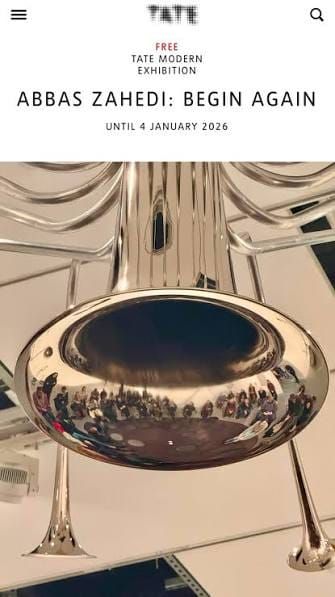
Now, why do I suspect that analog games are increasingly created with digital games design assumptions in mind? Well, in another blow to a teleological view of game history, it’s not just the grognards who stick with the analog. As it turns out, digital games managers increasingly work at high levels in the analog games sector. Even more traditional tech types, like ex-Google and Microsoft execs, get in on the action. This photo shows just a small sampling, but even at the level of rank and file design, tech and digital games workers now staff analog game companies. And, while this isn’t the main point of this particular presentation, the most important event in analog games, the publication of Dungeons and Dragons Open Games License in 2000, was modeled on open source software agreements and its author, Ryan Dancey, has flitted from analog to digital and back again, and is currently a big AI booster. Increasingly, analog games come to resemble digital platforms, with the games themselves serving as social platforms in barely disguised fashion.
I bring all this up because it goes some way to explaining some of the design assumptions in analog games these days. The doodad UIs we build are an indication that analog games operate under the same logics as digital games, and probably the tech sector at large, do. There also seems to be an assumption that the increased cognitive load of games like current Warhammer 40k and Gloomhaven will be handled by the players. And there’s a good indication that this happens if we at least entertain the possibility that analog games are designed with digital assumptions in mind. And while I don’t think the more teleological parts of Deterding’s analysis hold, his basic observation does: math is hard, games trend toward more complexity, and this is a problem which gave rise to modern digital games. And most importantly, it’s a problem that has to be solved.
This is where I want to conclude. None of this is good or bad. It just IS. Whatever analog sphere we imagine and whatever our reasons for preferring it, it isn’t separate from the digital. Even at the level of the basic creation of doodads, modern acrylics, 3D printing, and software assisted design make them possible at all. But let’s again take the colloquial sense of analog and digital on board. There are analog game companies and digital game companies. They have different design concerns because they are played differently. What I think is happening is that digital assumptions are increasingly entering the analog games space, and nowhere is that more apparent than in this corner of the analog games space. Doodads are UIs. We increasingly customize our play spaces.
As I said in my introduction, one of the things I want us to do is to treat game companies like any other. One way we do this is pore over sales figures and the like. I’m more interested in historical logics which shape all businesses, including our beloved game companies. Something as mundane as shipping costs, which I didn’t mention, play a part in this: loading up your box with play aids increases costs. But there are other logics as well: games are starting to resemble platforms. People play D&D for streaming pleasure, creating the affective transmission which we see in any other YouTube video. We talk about games as affordances for conversation, just as we do with Discord. And games like Dungeons & Dragons and Warhammer are starting to look like live service digital games, with sourcebooks as DLCs and subscription models.
Doodads, then, are best understood as a small instantiation of much larger, more powerful forces than just whether we can play our games quickly. They speak to logics of efficiency, innovation, global logistics, and platformization. But then again, everything else does. Why would games be any different?