AI, Games, and the Craft Problem

I wasn't going to weigh in on the recent, still ongoing debates around AI in games, its (seemingly very) limited use in Big Walk, and the IGF Awards but then Brendan Keogh wrote what I think is a very good piece about situating technology within historical systems and I changed my mind.
My strong suspicion after reading a good chunk of his work is that Brendan and I are simpatico on most things and this isn't any different. What I appreciate about Brendan's blog post is that it neatly sidesteps any sticky debates about art and quality in this instance, returning the debate to the technology in question. In any event, I'm pretty unqualified to assess Big Walk as an artistic project and am happy to yield judgement to the jurors, who made their assessment, whatever the outcome. Plus, I'm not going to play it because I like either big, stupid video games or DLC heavy grand strategy games.
The gist is that, at some point, the developers found some sticky bugs in their Unity code near release, consulted an LLM to help fix it, then fixed it. It was small but meaningful. In the absence of an assessment criteria, as my friend and juror Austin Walker said, they had to make one. So they did.
Mixed up in all of this is Unity. As Chet Faliszek notes, once upon a time you'd just talk to Unity directly when this sort of thing happens. Except Unity now kicks you to an AI agent and they've laid off the people you used to talk to, all of which further reinforces Brendan's point that AI isn't one thing in one place but a tangled mess of historical-technological processes. You could say that the fault is with Unity instead of the devs at House House. But then you have to unwind other things: the ways algorithms have accelerated our expectations for frictionlessness, for instance. But then you'd have to figure out where to apportion blame to, I don't know, the invention of search engines. On and on, until you go mad.
I've gone quite mad enough thinking about all this, so I'll pass. Instead, I'll stop recounting what others said and try to inject what I'm interested here: craft.
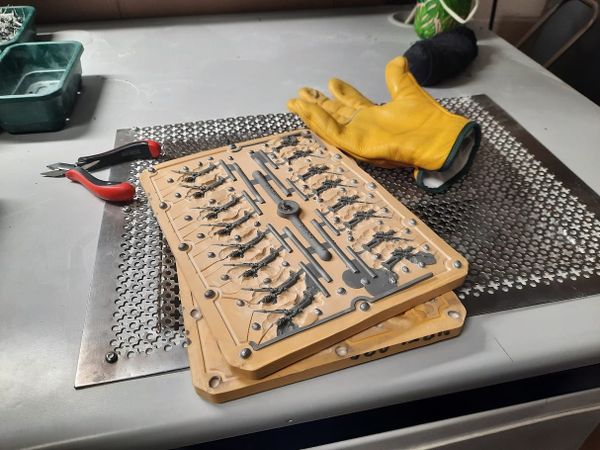
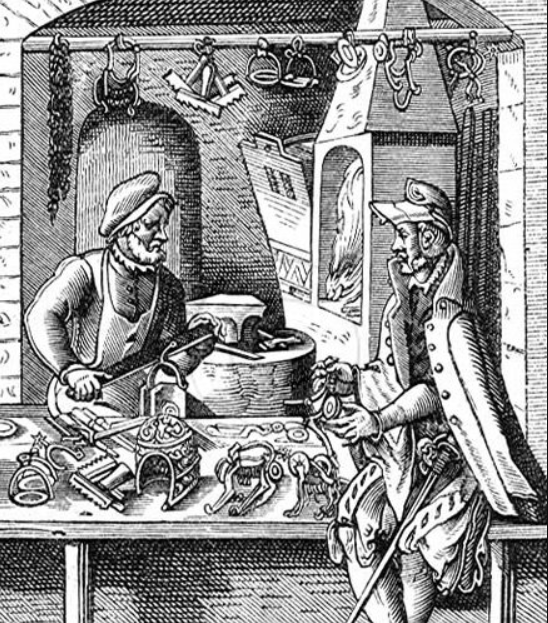
If I had to rank my intellectual interests they'd be craft and media histories at 1a and 1b, then games at 2. Games, for me, are an object of inquiry which lay bare interesting, ongoing questions about how and why we make things, which are infinitely more interesting than specific questions about interpretation. I don't even know if I'm terribly interested in what and how things actually are in reality anymore, finding a lot more meat on the bone of asking why do people think they do what they do? My first book, based on my dissertation, is about the matter of craft and technology at least as much as it's about miniatures wargames. For me, the received defintions of craft are pretty unsatisfying, breaking down into some variable combination of traditional handiwork, liberating and liberatory rejection of the industrial and/or digital, and a mode of politics which privileges tradition.
While I don't think those are entirely wrong, exactly, I think the real core of craft is that it's an ongoing, community oriented, fluid, and always communicative act of negotiation with technologies. You can find a lot of that in Sennett's The Craftsman, considered one of the ur-texts on craft. But I picked miniatures wargames as an object to focus my dissatisfaction for a pretty simple reason: for Sennett, CAD software in the hands of architects is the prime example of being used by a machine, except that same CAD software is used in miniatures design, development, and sculpting at every medium to large miniatures studio in the world. Same tech, different communities, different outcomes.
If I'm feeling uncharitable toward Sennett, he's buying into the mystification of social relations by essentializing a particular technology. If I'm feeling more charitable, he's just a little incomplete in the way that nobody can know everything. It's fine and doesn't really matter in the end. But, regarding craft, if CAD can be used in crafty ways in different settings, including and especially in industrial settings like miniatures production and logistics, then what other technologies occupy the same fluid place?
Susan Luckman and Alessandro Gandini are both good on this regarding the digital vs analog divide. You can't just whittle your wood carvings for the market anymore. You have to be an influencer, sell on Etsy, put your money as a string of digits in a bank, interface with computer directed logistics systems, etc. What then becomes apparent is that, variously stated by Jonathan Sterne and my co-advisor Michael Palm, all the kvetching about the purity of the analog is really just what set of political commitments and affective attachments you have to those categories of analog/digital or, eventually, craft/industrial.
Back to the IGF and House House. It strikes me, very strongly, that if crafty development of games is ultimately about an open process of negotiation, based around use-value, within an organization, this is about as good an outcome as you're liable to get. A read of what went down doesn't seem like this at all resembles vibe coding or slop, but a considered negotiation around the resistance of a bug which was inherent to the worked material (Unity code).
Now, contra the craftivists, I don't think there's anything inherently liberatory about craft as a mode of living. But as an ethics for doing good work, it's both important and not at all at odds with the sort of digitally distributed, industrial scale, unionized in fits and starts world of video games. That ethics matter is why House House did what they did, why the jurors did what they did, and it's really also why I refuse to discard the early Marx: you have to get through the day and not everything related to ethical considerations of technology and work is just ephemera, even if in the last instance it's economics (so it goes). And again: why do people think they're doing what they do, rather than why do they actually do what they do? Because, no, AI isn't going away, either in slop form or its (fewer) more useful forms and, echoing Brendan, the decisions on what that ends up looking like should belong to us.